
Skip to content

Construction Loans in California

A practical, agent-first overview of construction financing structures—so deals stay fundable from contract to closing.

Construction-to-Permanent

  • One-time close construction & mortgage financing without locking permanent terms upfront
  • Flexible underwriting for complex or non-standard projects
  • Licensed general contractor required and approved prior to closing
  • Draw-based funding aligned to construction milestones
  • Clear exit flexibility (sale or refinance upon completion)
Ground-Up Construction

  • Stand-alone construction financing without locking permanent terms upfront
  • Flexible underwriting for complex or non-standard projects
  • Licensed general contractor required and approved prior to closing
  • Draw-based funding aligned to construction milestones
  • Clear exit flexibility (sale or refinance upon completion)

Owner Builder

  • Borrower acts as the general contractor on the project
  • No third-party GC required
  • Single construction loan structure tailored to owner-managed builds
  • Draws released based on verified construction milestones
  • Flexible project control for experienced owner-builders 
  • Clear exit options upon completion (refinance, sale, or hold)

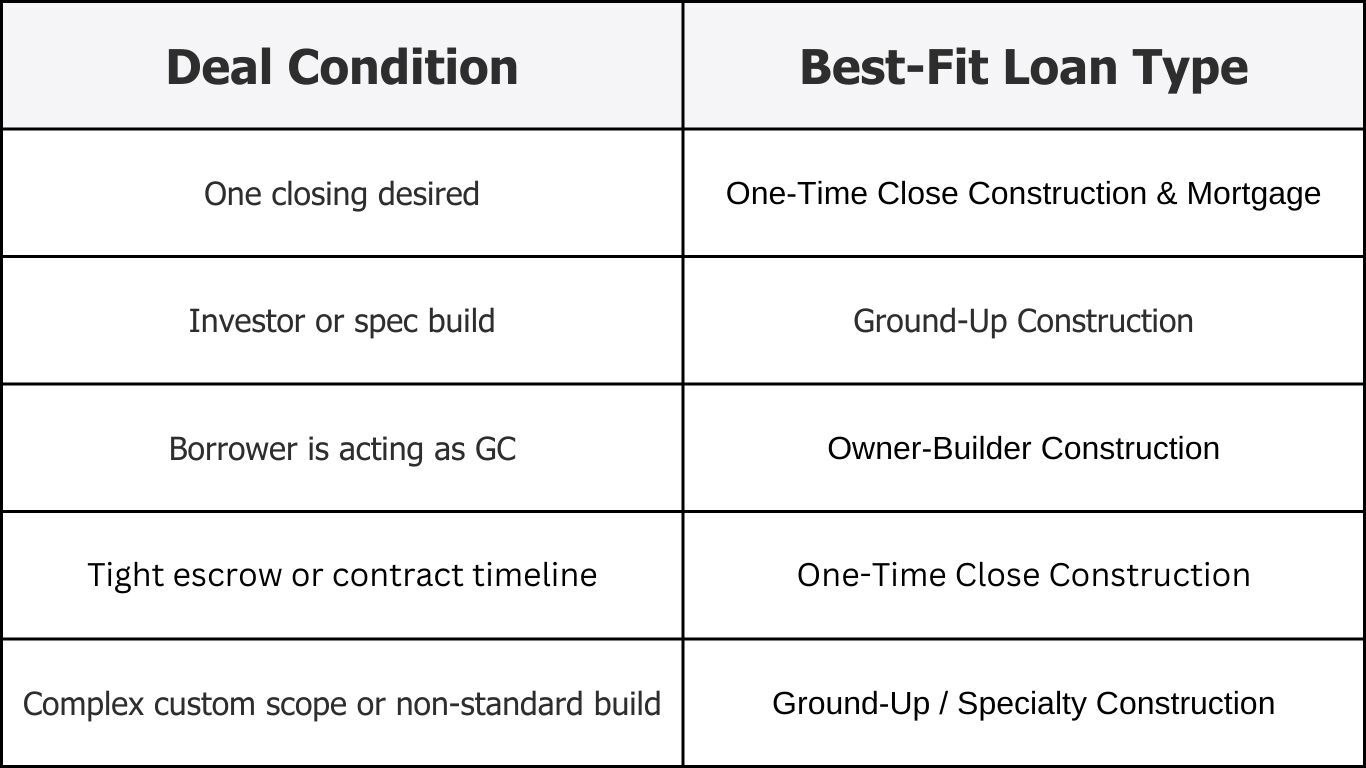
Choosing the Right Structure

Construction Mortgage Loan Image

Scenario Checklist

Construction2 Mortgage Loan Image (1)

Property type & location

Confirm zoning, lot status, and jurisdiction impact on construction eligibility.

Build type: ground-up / teardown / addition

Identify whether the project is ground-up, teardown, or structural addition.

Borrower occupancy: primary / second / investor

Determine if the home will be primary, second residence, or investment.

Builder structure

Clarify whether a licensed general contractor or owner-builder will manage construction.

Estimated total project cost

Review full budget including hard costs, soft costs, and contingency.

Permit status

Confirm whether permits are approved, in process, or not yet submitted.

Construction timeline

Align loan term and draw schedule with realistic build milestones.

Exit strategy

Plan for refinance, sale, or long-term hold upon project completion.

FAQ

When should financing be involved on a construction deal?

Financing should be involved before contracts are finalized. Construction loans depend on future value, permits, budgets, and timelines. Early scenario review helps confirm feasibility and prevents deal-breaking changes after escrow opens.

How do construction loans differ from standard purchase loans?

Construction loans finance a process, not a finished property. Funds are released in stages, underwriting reviews plans and budgets, and timelines matter more than rates. Structure and documentation drive approval more than price.

Is a licensed general contractor required?

In most construction loan programs, yes. Lenders typically require a licensed and approved general contractor. Owner-builder scenarios are handled separately and require enhanced borrower review and documentation.

How does the appraisal work for construction loans?

Appraisals are usually based on the as-completed value, using approved plans, specifications, and the construction budget. Incomplete or inconsistent documentation is one of the most common causes of appraisal delays.

What is the most common reason construction deals fail to close?

Misalignment between the budget, scope of work, permits, and exit strategy. These are structural issues, not credit issues, and are best identified through early loan scenario review.

Construction3 Mortgage Loan Image

Built to Support Agents Through Closing

Scenario-based financing guidance for construction deals—designed to work alongside you from planning through execution.

Request Construction Loan Scenarios