
Skip to content

Home Equity & HELOC Financing

Access home equity without refinancing the first mortgage. Clear, scenario-based HELOC structures designed for primary, second, and investment properties.

HELOC
Rate & Term | Cash-Out | Revolving Credit
  • 640+ to 680+ FICO (program tier dependent)

  • Up to 85% CLTV*

  • Up to 50% DTI*

  • Minimum line amount: $20,000–$25,000

  • Initial draw required: 75% of approved line

  • Draw amounts up to $500,000

  • 3- or 5-year draw periods

  • Primary, second, and investment properties eligible


Closed-End Second

Cash-Out | Fixed Term
  • Up to 90% max CLTV (Full Doc, Bank Statement, DSCR)

  • Owner-Occupied, Second Homes, and Investment Properties

  • Purchase, Rate & Term Refinance, and Cash-Out Refinance

  • Fixed terms: 10, 20, or 30 years

  • Credit scores down to 660

  • Loan amounts: $50,000 – $850,000

  • Second-lien position only

  • AVMs allowed for loans ≤ $400,000*

  • First mortgage on purchases may be held with another lender

  • Entity closing available

  • Asset depletion eligible

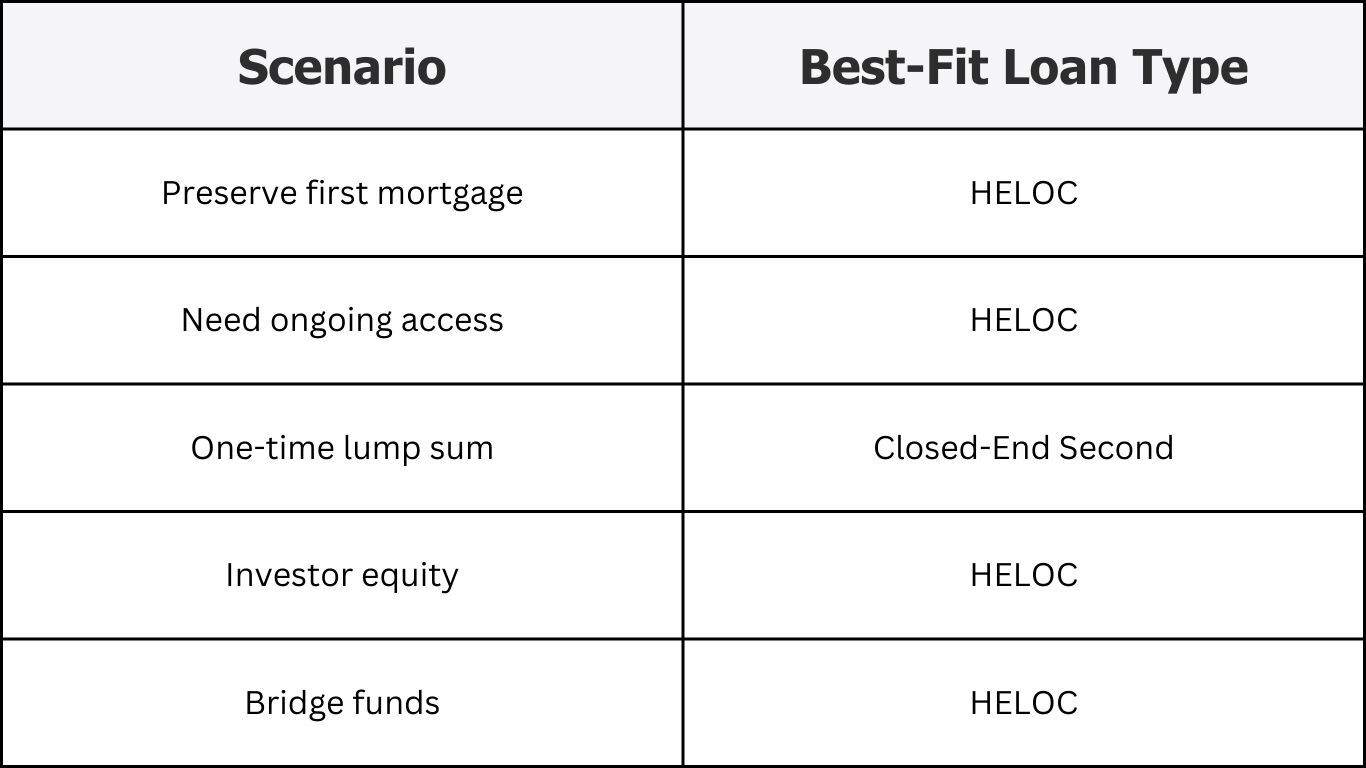
When to Use Home Equity

HELOC1 Mortgage Loan Image

Scenario Checklist

HELOC2 Mortgage Loan Image

Property type & location

Identify whether the property is a primary residence, second home, or investment.

Existing first mortgage

Confirm current balance, lender, and whether the first lien remains in place.

Current estimated property value

Provide a recent value estimate to determine appraisal and structure.

Intended use of funds

Clarify whether funds are for liquidity, renovation, payoff, or bridge use.

Lien position awareness

Home equity loans are structured as second liens, not refinances.

Future plans

Consider upcoming refinance, sale, construction, or long-term hold.

Timing considerations

Note any active escrow, deadlines, or time-sensitive constraints.

FAQ

When does a HELOC make more sense than refinancing?

A HELOC is often better when you want cash access without replacing a low first-mortgage rate. It keeps the existing loan intact while adding flexible second-lien financing.

How does CLTV differ from LTV?

LTV measures the first mortgage only. CLTV includes all liens combined, including the first mortgage plus the HELOC or second loan.

Can equity be accessed on investment properties?

Yes. Many home equity programs allow primary residences, second homes, and investment properties, subject to credit, CLTV, and appraisal requirements.

How do appraisal requirements differ by loan size?

Smaller lines may qualify for automated or limited valuations. Larger loan amounts typically require exterior or full appraisals to confirm value and risk.

What is the most common reason equity deals stall?

Incomplete scenario planning. Issues with lien position, valuation expectations, or future refinance plans often delay or stop approvals.

HELOC4 Mortgage Loan Image

Use Equity Without Breaking the First Mortgage

Scenario-based review helps determine the cleanest equity structure before escrow.

Request Home Equity Loan Scenarios